2026 Best Candy Machine for Global Buyers?
Choosing the 2026 best candy machine for global buyers requires more than comparing prices and glossy product photos. A reliable candy machine should match your product type, sales location, daily volume, and local operating conditions. A compact countertop model may suit a small café, while a high-capacity unit could serve a busy cinema or family entertainment center. The right choice depends on evidence, not excitement.
This guide examines practical factors that experienced buyers often check before placing an international order. These include heating consistency, dispensing accuracy, food-contact materials, cleaning access, energy consumption, and replacement-part availability. Voltage and plug compatibility also matter. A machine designed for one market may need a different electrical configuration elsewhere. Confirm specifications directly with the manufacturer. Do not rely on assumptions.
Shipping can change the real purchase cost. Crating, import duties, installation, training, and after-sales service deserve equal attention. Clear manuals and responsive technical support can prevent a small fault from becoming an expensive shutdown. Certifications should be verified through credible documentation, especially when the machine will operate in a public commercial space.
There is no universal winner.
A lower-priced model may offer strong value, but weaker support. A premium machine may provide durability, yet exceed a new operator’s needs. Product testing, supplier references, warranty terms, and realistic sales estimates should guide the final decision. Some recommendations may change as suppliers update components or regional standards. That uncertainty deserves honest attention. This overview aims to help global buyers compare candy machine options carefully, identify hidden risks, and choose equipment that performs reliably in real-world conditions.
Candy Machine Basics and Global Market Requirements
2026 Best Candy Machine for Global Buyers?
Candy Machine Basics and Global Market Requirements
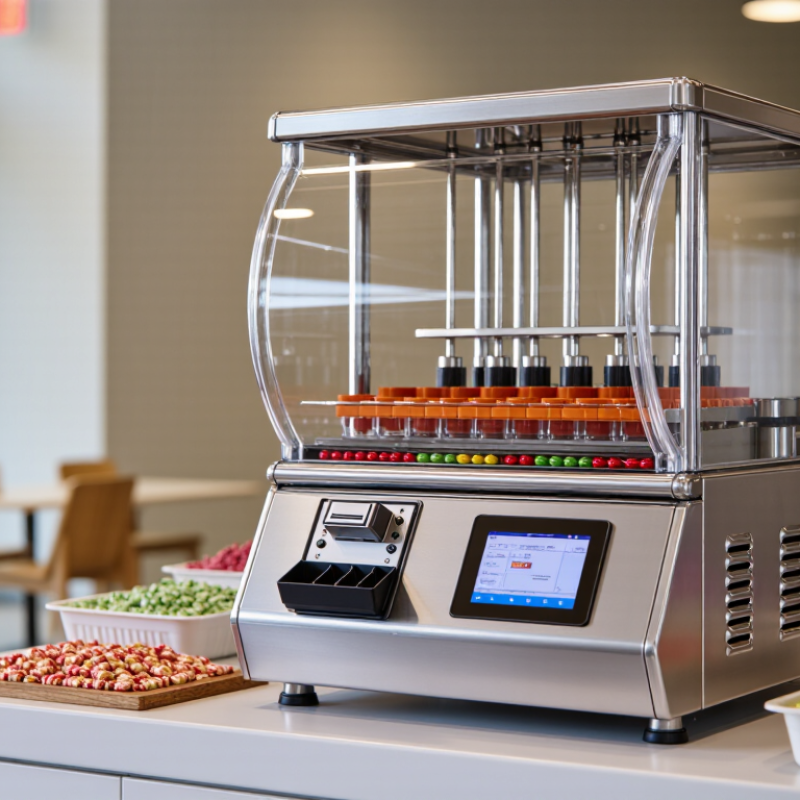
A candy machine dispenses measured portions through a hopper, motor, sensor, and control panel. Buyers should match the machine with candy size, texture, and production speed. Hard candy may flow smoothly, while sticky pieces can block narrow channels. That detail matters.
From practical equipment reviews, stainless steel contact parts are easier to clean and inspect. Smooth corners reduce residue buildup. Removable hoppers also support faster sanitation checks. Operators should confirm food-contact materials and request testing documents before purchase. A clear viewing window helps staff monitor supply without opening the machine.
Global requirements vary by destination. Voltage, plug type, language labels, and electrical safety documents need early checking. Some markets require specific instructions, warning labels, or import records. Packaging should protect the machine from moisture and vibration during long transport. Poorly translated manuals create avoidable mistakes. I have seen buyers focus on output speed and overlook local servicing. That choice can become expensive.
A reliable supplier should explain cleaning intervals, spare-part access, warranty limits, and installation steps. Ask for sample videos, not only catalog figures. A machine may perform well in a factory but struggle in a humid shop. Real conditions are messier. Buyers should test candy flow, portion accuracy, noise, and emergency controls before full deployment. The best choice is not always the fastest one.
Key Types of Candy Machines and Their Production Uses
2026 Best Candy Machine for Global Buyers?
Key Types of Candy Machines and Their Production Uses
Choosing a candy machine starts with the product, not the advertised output. Hard candy cookers and depositors suit clear drops, filled centers, and small seasonal batches. They control syrup temperature, moisture, and deposit weight. A reliable cooling tunnel prevents sticking and surface cracks.
Gummy production usually needs a starchless depositor with heated hoppers and accurate molds. It handles fruit-shaped pieces, vitamins, and soft textures with consistent portions. Chocolate lines use tempering units, enrobing machines, and cooling tunnels. These systems create coated bars, pralines, and molded pieces. Watch the details. Uneven cooling can ruin an otherwise excellent batch.
Lollipop machines form, insert, and wrap products in a continuous process. They work well for high-volume retail orders and custom shapes. Rope sizers and batch rollers are useful for chewy candy and twisted products. In factory trials, operators should check cleaning time, changeover speed, energy use, and spare-part access. A faster machine is not always better. Keep it practical. The right choice depends on texture, daily capacity, available floor space, and operator skill. Buyers should request test samples using their actual recipe. Small differences in syrup behavior can produce large production problems. That part is easy to underestimate.
| Machine Type | Primary Production Use | Typical Candy Products | Core Process | Typical Capacity Range* | Suitable Ingredients | Main Advantages | Important Buying Considerations | Best Fit |
|---|---|---|---|---|---|---|---|---|
| Hard Candy Cooking and Forming Line | Continuous cooking, forming, cooling and wrapping of sugar-based candies. | Boiled sweets, filled hard candy, fruit drops, mints and lozenges. | Vacuum or atmospheric cooking followed by rope sizing, die forming or depositing. | Approximately 100–1,500 kg/h, depending on the line configuration. | Sugar, glucose syrup, water, acids, colors, flavors and selected fillings. | High throughput, consistent piece weight and good shelf stability. | Check cooking temperature control, cooling performance, filling accuracy and compatibility with local electrical standards. | Medium to large factories |
| Depositing Machine | Deposits measured quantities of liquid candy mass into molds or onto a conveyor. | Soft candies, center-filled sweets, jelly candies, fondants and molded hard candy. | Heated hopper and servo-controlled pistons or valves portion the candy into molds. | Approximately 30–600 kg/h, depending on the number of depositing heads. | Cooked sugar mass, gelatin or pectin mixtures, fondant and chocolate-based fillings. | Accurate dosing, flexible shapes and reduced manual handling. | Confirm viscosity range, heating method, mold format, cleaning access and changeover time. | Flexible product lines |
| Gummy and Jelly Candy Production Line | Produces molded, starch-free or starch-molded gummy and jelly confectionery. | Gummy bears, fruit shapes, pectin jellies, vitamin gummies and functional candies. | Cooking, mixing, depositing, molding, cooling, demolding, drying and oiling or sugar coating. | Approximately 50–1,000 kg/h, based on recipe, mold size and drying capacity. | Gelatin, pectin, starch, sugar, glucose syrup, acids, flavors and colors. | Supports many shapes and recipes; suitable for sugar, reduced-sugar and gelatin-free formulations. | Evaluate humidity control, drying-room capacity, allergen management and recipe flexibility. | Gummy specialists |
| Lollipop Forming and Sticking Line | Forms candy pieces, inserts sticks and prepares products for wrapping. | Ball lollipops, flat lollipops, filled lollipops and novelty shapes. | Rope sizing or depositing, molding, stick insertion, cooling and individual wrapping. | Approximately 80–500 kg/h or about 200–1,200 pieces/min, depending on product size. | Hard candy, bubble-gum centers, chewy centers, flavors, colors and edible acids. | Efficient stick placement and consistent product appearance at high speed. | Check stick diameter and material compatibility, mold changeover, wrapping format and product cooling time. | Impulse and novelty products |
| Toffee, Caramel and Chewy Candy Line | Cooks, aerates, cools, forms and cuts high-viscosity chewy confectionery. | Caramels, toffee, taffy, nougat and filled chewy candy. | Controlled cooking followed by cooling, pulling or aeration, slab forming, cutting and wrapping. | Approximately 50–500 kg/h, influenced by recipe viscosity and cooling method. | Sugar, glucose syrup, dairy or plant-based fats, milk solids, gelatin and nuts where permitted. | Creates distinctive textures and supports premium or filled products. | Assess jacketed surfaces, scraper design, temperature accuracy, allergen controls and anti-stick features. | Premium chewy candy |
| Panning and Candy Coating Machine | Builds layers of sugar, chocolate, glaze or seasoning around a center product. | Dragees, coated nuts, chocolate-coated centers, sugar shells and polished candies. | Rotating pan or drum applies coating syrup, chocolate or glaze while air controls drying and polishing. | Approximately 10–300 kg per batch, with cycle times commonly ranging from 1 to 6 hours. | Sugar syrup, chocolate, cocoa butter, nuts, chewing gum centers and polishing agents. | Produces attractive layered finishes and varied textures without changing the center. | Review batch size, airflow and dehumidification, coating uniformity, cleaning procedures and room conditions. | Batch production |
| Chocolate Tempering and Depositing Line | Tempers chocolate and deposits it into molds, shells or onto centers. | Chocolate bars, pralines, filled shells, molded pieces and enrobed candy. | Melting, controlled crystallization, depositing or enrobing, cooling and demolding. | Approximately 20–1,500 kg/h, depending on tempering and cooling-line size. | Dark, milk or white chocolate; nut, biscuit, caramel and cream fillings. | Improves shine, snap, contraction and storage stability when temperature is controlled correctly. | Confirm cooling tunnel length, temperature stability, recipe changeover, climate-control needs and food-contact materials. | Chocolate confectionery |
| Chewing Gum and Bubble-Gum Line | Blends, kneads, extrudes, sizes, forms and wraps gum products. | Stick gum, pellet gum, center-filled gum and bubble-gum balls. | Base softening, ingredient mixing, extrusion or pelletizing, conditioning, coating and packaging. | Approximately 50–500 kg/h, depending on gum format and coating stages. | Gum base, sweeteners, softeners, flavors, colors and powdered or liquid coating materials. | Supports multiple formats and long shelf-life products. | Check gum-base handling, dust control, conditioning-room requirements, coating uniformity and packaging integration. | Gum manufacturers |
| Sugar-Coating and Seasoning Drum | Applies dry or liquid coatings to small candy pieces and snack-style confectionery. | Sour candies, sugar-coated pieces, flavored nuts and coated pellets. | Controlled tumbling with spraying, powder dosing, drying and polishing. | Approximately 20–500 kg per batch, depending on drum volume and coating recipe. | Fine sugar, acids, flavors, colors, powders, oils and glazing solutions. | Simple product changeover and good suitability for small or medium batches. | Consider drum loading ratio, spray control, dust extraction, noise level and cleanability. | Small to medium producers |
*Capacity figures are indicative industry ranges. Actual output depends on recipe viscosity, piece weight, mold format, operating temperature, automation level, cooling or drying conditions and packaging speed.
How to Compare Capacity, Features, and Operating Costs
2026 Best Candy Machine for Global Buyers?
How to Compare Capacity, Features, and Operating Costs
For global buyers, the best candy machine is not always the largest one. Capacity should match daily demand, storage space, and staff availability. A 10-kilogram hopper may look impressive, but slow sales can leave ingredients sitting too long. Check the real production rate, not only the advertised maximum. In practical evaluations, I measure output during a full operating hour, including loading, cleaning, and short pauses.
Useful features should reduce mistakes. Look for accurate temperature controls, food-contact parts, simple draining, and clear safety instructions. Automatic stirring can improve consistency, especially when workers change shifts. A removable kettle also makes cleaning easier. Keep it simple. Extra screens and complicated settings may increase training time without improving the product. I once focused too much on output and underestimated cleaning effort. That was a costly judgment.
Operating costs include electricity, ingredients, labor, maintenance, packaging, and shipping. A 1.5-kilowatt heater may use less power than a larger model, but it could produce slower during busy periods. Compare energy use per kilogram of finished candy, rather than power rating alone. Global buyers should also verify voltage, plug type, spare-part access, warranty terms, and local food-equipment requirements. Calculate the cost of one selling day. Then test the calculation against a quiet day, because demand is rarely predictable.
Global Safety, Certification, and Import Considerations
For global buyers, the best candy machine is not simply the fastest model. It must match local voltage, food-contact rules, guarding requirements, and import documentation. IEC 60204-1 supports safer electrical equipment design, while ISO 12100 provides a recognized method for machinery risk assessment. Ask the supplier for a risk assessment, wiring diagram, emergency-stop test, and materials declaration. A polished brochure is not enough.
Food safety deserves equal attention. The World Health Organization estimates that 600 million people become ill after eating contaminated food each year. Stainless-steel contact surfaces, cleanable seams, and controlled heating are practical safeguards. For European imports, check food-contact requirements under Regulation (EC) No 1935/2004. Other markets may require different declarations or testing. Certification marks can also cover only specific machine versions, not every configuration.
Tips: Confirm the HS code before ordering. Request a commercial invoice, packing list, certificate of origin, and test reports. Measure the machine doorway, crate, and installation space. Import duties and port charges can change the real cost sharply. Safety Gate recorded more than 4,000 product alerts in 2024, showing why compliance checks matter. I would still verify every certificate with the issuing laboratory. Documents sometimes look convincing, but a missing test scope can create delays, redesign costs, or unsafe operation.
Selecting the Best Candy Machine for Different Buyer Needs
2026 Best Candy Machine for Global Buyers?
Selecting the best candy machine depends on the buyer’s production goals, not a fashionable specification sheet. A small confectionery may need compact equipment, simple controls, and 10–30 kilograms of daily output. A larger factory may prioritize continuous operation, faster cooling, and automated depositing. Matching capacity to real demand prevents unnecessary electricity use and costly downtime.
Experienced buyers should check candy compatibility, heating accuracy, cleaning access, and food-contact materials. Stainless steel surfaces are easier to inspect and sanitize. Voltage, frequency, plug design, and local service support also matter across global markets. Ask for installation drawings, operator manuals, spare-parts lists, and safety certificates. These documents reveal practical reliability better than sales language. Total cost includes shipping, customs, training, maintenance, and replacement parts. A low purchase price can become expensive later.
Tips: Request a sample-production test before ordering. Measure texture, weight consistency, cooling time, and waste. Confirm whether one trained operator can manage the machine safely. Leave space around the equipment for cleaning and repairs. Do not rely only on advertised output; actual performance may fall with sticky recipes or humid rooms. My own preference would be a slightly slower machine with stable results, though this choice may not suit every buyer. Trial data should guide the final decision.
2026 Best Candy Machine for Global Buyers
Selecting the best candy machine for different buyer needs by typical production capacity
The chart uses representative midpoints from commonly published capacity ranges for sugar confectionery equipment. Small-batch machines suit testing and handmade production, while high-capacity systems are designed for regional and industrial buyers. Actual output depends on candy type, recipe, cooling time, automation level, and operating conditions.
Indicative capacity data: typical market ranges rounded for comparison; not a quotation or guaranteed production specification.
Related Posts
-
2025 Market Trends for Best Candy Dispenser Machines: Success Stories and Insights
-
Innovative Candy Dispenser Machines Set to Transform the Market at 138th Canton Fair 2025
-
Why Choose a Candy Dispenser Machine for Your Business?
-
Understanding Global Production Standards for Selecting the Best Coffee Vending Machine
-
Understanding the Industry Standards for the Best Vending Machines Designed for Office Spaces
-
10 Best Food Vending Machines Transforming Convenience in 2023