
What Types of Vending Machines Are Available?
What Types of Vending Machines Are Available?
Vending machines have changed far beyond traditional snack dispensers. Today, they serve bottled water, fresh meals, coffee, personal care products, electronics, and workplace supplies. Their designs vary by product size, temperature requirements, payment systems, and customer expectations. A compact snack machine may fit beside a school hallway, while a refrigerated meal machine needs reliable cooling and frequent restocking. Location matters more than many new operators expect.
According to Carla Balakgie, former president and CEO of the National Automatic Merchandising Association, “Convenience is the cornerstone of vending.” That idea explains why vending machines appear in offices, hospitals, airports, apartment buildings, gyms, and universities. Each setting demands a different product mix. Coffee machines suit busy workplaces. Fresh-food machines may work better in hospitals or campuses. Smart retail kiosks can offer chargers, toiletries, or other practical items.
Modern vending machines also include cashless payments, touchscreens, inventory sensors, remote monitoring, and energy-efficient refrigeration. These tools can improve customer experience and reduce unnecessary service visits. Still, technology does not guarantee success. A beautifully designed machine can perform poorly in a quiet location. Product quality can decline when replenishment schedules are careless. Even pricing requires regular review.
This guide examines the main types of vending machines, their common uses, operating requirements, and practical advantages. It also considers limitations that are easy to overlook. The best choice is rarely the newest machine. It is the machine that matches the place, product, and people using it.
Core Categories of Vending Machines
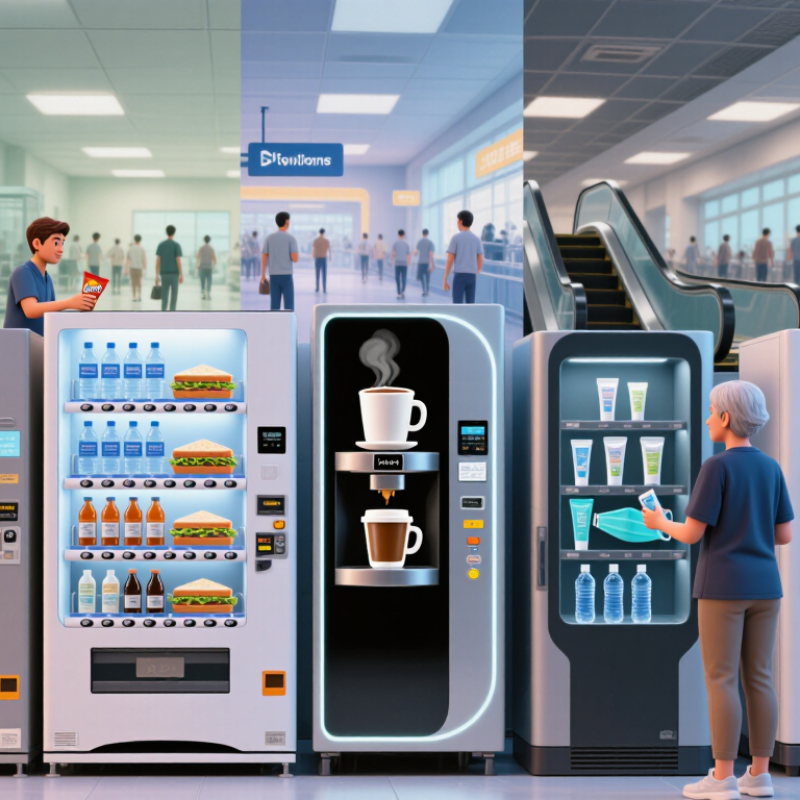
Vending machines now cover far more than packaged snacks and cold drinks. The core categories include snack machines, beverage machines, combination units, fresh-food machines, and specialty retail machines. Each category serves a different purchasing moment.
Snack machines usually offer shelf-stable products in offices, schools, transport hubs, and residential buildings. Beverage machines focus on bottled water, juice, coffee, and other ready-to-drink options. Combination machines save floor space by placing snacks and drinks behind one control panel. According to Grand View Research, the global vending machine market was valued at approximately $21.84 billion in 2023. The report also forecasts a 10.7% compound annual growth rate from 2024 to 2030. That growth reflects wider demand for quick, unattended purchasing.
Fresh-food machines add sandwiches, salads, fruit, and prepared meals. They require tighter temperature control and more frequent replenishment. Specialty machines may sell personal-care items, electronics accessories, flowers, or workplace supplies. Their usefulness depends heavily on location. A machine near a hospital entrance needs different products from one beside a factory break room. The categories overlap more than a neat chart suggests. That is worth remembering.
NAMA’s 2023 industry census reported that the broader U.S. convenience-services sector generated about $31.1 billion in revenue. Vending remains only one part of that figure, so the data should not be treated as a direct vending total. Still, it shows the scale of unattended retail. Product mix, payment reliability, accessibility, and maintenance often matter more than appearance. A well-stocked machine can feel invisible. A poorly managed one becomes a daily frustration.
| Core Category | Typical Products | Dispensing Method | Temperature Requirements | Common Installation Locations | Key Features and Considerations |
|---|---|---|---|---|---|
| Snack Vending Machines | Chips, cookies, candy, nuts, granola bars, crackers, and other packaged snacks | Coil, conveyor, or shelf-based dispensing | Ambient; cooling may be optional | Offices, schools, hospitals, transportation facilities, and recreational venues | Suitable for individually packaged products; adjustable spirals or shelves help accommodate different package sizes. |
| Cold Beverage Vending Machines | Bottled water, soft drinks, juices, sports drinks, and other chilled beverages | Column, conveyor, elevator, or drop-delivery system | Refrigerated, commonly about 2–7°C | Workplaces, campuses, leisure facilities, retail entrances, and public buildings | Requires reliable refrigeration, ventilation, drainage management where applicable, and regular temperature monitoring. |
| Hot Beverage Vending Machines | Coffee, tea, hot chocolate, soup, and other powdered or liquid hot drinks | Ingredient mixing, brewing, and cup-dispensing system | Heated; beverages are typically served hot | Offices, hospitals, colleges, factories, waiting areas, and hospitality facilities | Needs a water supply or refillable reservoir, ingredient storage, cup handling, cleaning, and regular sanitation. |
| Fresh Food Vending Machines | Sandwiches, salads, fruit portions, yogurt, pastries, and prepared meals | Refrigerated shelf, locker, elevator, or conveyor dispensing | Refrigerated, generally at or below 5°C for perishable foods | Business districts, hospitals, universities, transport hubs, and large workplaces | Requires strict temperature control, dated inventory rotation, allergen information, food-safety procedures, and frequent restocking. |
| Frozen Food Vending Machines | Frozen meals, ice cream, frozen snacks, and other frozen packaged foods | Insulated spiral, shelf, locker, or elevator system | Frozen, commonly around -18°C or below | Residential areas, campuses, workplaces, supermarkets, and community facilities | Requires continuous low-temperature operation, suitable insulation, energy management, and protection against temperature fluctuations. |
| Combination Vending Machines | A mix of snacks, packaged foods, and bottled or canned beverages | Separate coils, shelves, or columns within one cabinet | Ambient, refrigerated, or divided by product zone | Small offices, schools, apartment buildings, hospitals, and locations with limited floor space | Provides product variety in a single footprint; capacity and temperature settings must be balanced across product sections. |
| Specialty Retail Vending Machines | Personal care items, hygiene products, electronics accessories, stationery, and travel essentials | Coil, locker, drawer, or secure compartment dispensing | Usually ambient | Airports, hotels, universities, public facilities, offices, and transit stations | Useful for urgent or convenience purchases; product security, compact packaging, and clear instructions are important. |
| Personal Protective Equipment Machines | Face masks, gloves, safety glasses, ear protection, shoe covers, and protective garments | Coil, locker, drawer, or controlled-access dispensing | Ambient; products should be kept clean and dry | Factories, construction sites, laboratories, hospitals, warehouses, and educational facilities | Supports controlled access to essential safety supplies; compartments should protect products from contamination and damage. |
| Pharmacy and Health-Product Machines | Over-the-counter medicines, first-aid supplies, pregnancy tests, vitamins, and basic health items | Secure shelf, locker, drawer, or controlled-dispensing mechanism | Usually ambient; some products require controlled storage | Clinics, hospitals, campuses, workplaces, hotels, and transportation facilities | Product eligibility, labeling, age restrictions, storage conditions, and applicable health regulations must be considered. |
| Bulk Vending Machines | Small quantities of candy, toys, capsules, gumballs, stickers, or novelty items | Gravity-fed hopper, wheel, or capsule mechanism | Ambient | Family entertainment venues, restaurants, shopping centers, and community spaces | Typically compact and mechanically simple; products must be sized and shaped appropriately for the dispensing mechanism. |
| Ice Vending Machines | Bagged ice or dispensed ice for personal and commercial use | Ice-making, storage, weighing, and bagging or dispensing system | Frozen | Campgrounds, fuel stations, marinas, sports venues, and high-traffic outdoor locations | Requires a dependable water source, sanitation controls, drainage, weather protection, and regular maintenance of ice-contact surfaces. |
| Water Dispensing Machines | Filtered, purified, or refillable drinking water | Metered nozzle or container-filling station | Ambient or chilled, depending on configuration | Gyms, campuses, offices, retail areas, public facilities, and residential communities | Requires water-quality monitoring, filter replacement, sanitation, spill management, and compatibility with customer containers. |
Related Posts
-
What Is the Best China Vending Machine for Office Use?
-
Future of Best Hot Drinks Vending Machines in 2025 Technological Trends and Essential Checklist for Success
-
2026 How to Choose the Best Snack Machine for Your Business?
-
Why You Should Consider a Snack Dispenser Machine for Your Business?
-
Revolutionizing Vending Machines in 2025 The Ultimate Guide to Innovative Free Solutions for Global Buyers
-
Innovative Solutions for Implementing Best Vending Machines in Your Business