Top Touch Screen Kiosk Manufacturers in China
China has become a major source of touch-screen kiosks for retail, hospitality, healthcare, transport, and self-service applications. Buyers can find manufacturers offering compact countertop units, freestanding terminals, outdoor enclosures, and custom-built systems. Yet a polished product photo reveals little about long-term performance. Screen brightness, touch accuracy, enclosure strength, operating temperature, and access to replacement parts all deserve attention.
Design researcher Don Norman observed, “Good design is actually a lot harder to notice than poor design, in part because good designs fit our needs so well that the design is invisible.” That idea applies directly to a Touch Screen Kiosk: clear prompts, responsive input, and comfortable screen height can make routine tasks feel effortless. Details matter. So does testing the unit with real users, not only reviewing a specification sheet.
This guide introduces leading Touch Screen Kiosk manufacturers in China and the practical differences buyers should investigate. It considers product range, customization, component choices, quality-control practices, and communication during project development. These factors can help narrow a shortlist, but they cannot replace independent verification. A supplier may excel at indoor retail terminals yet lack experience with outdoor installations or specialized software. That distinction is easy to miss. Treat manufacturer claims as starting points, request relevant documentation, and compare samples against the actual installation environment. The best choice depends on the intended use, service expectations, and available support—not simply the lowest quoted price.
What Is a Touch Screen Kiosk?
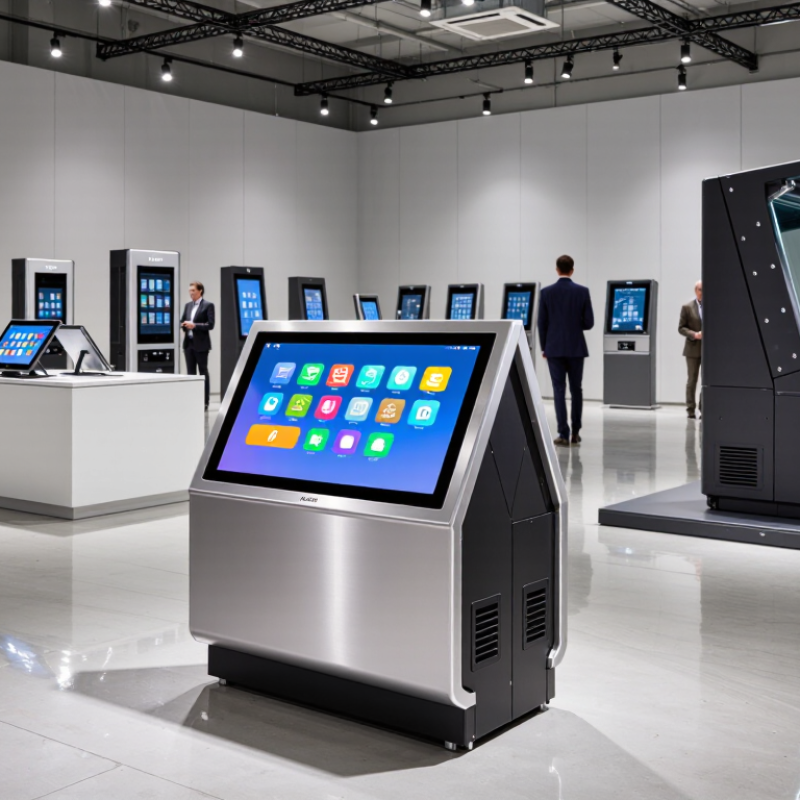
A touch screen kiosk is a self-service computer built into a freestanding or wall-mounted enclosure. Its display lets people tap menus, enter details, or find information without a staff member guiding every step. A typical unit includes a touchscreen, processor, software, and network connection. Some models also include scanners, printers, or payment modules. The hardware matters, but clear interface design matters just as much.
Kiosks appear in shops, transport hubs, clinics, and reception areas. A traveler might tap a map, check a route, and print a ticket. The experience should feel direct. Small details can undermine it: glare on the display, tiny text, or a slow response after a tap. A kiosk is not automatically convenient. Placement, accessibility, cleaning, and reliable software all affect whether people will use it again.
Grand View Research valued the global interactive kiosk market at USD 31.75 billion in 2023 and projected a 9.0% compound annual growth rate from 2024 to 2030. Its report covers a broad interactive-kiosk market, not touch-screen devices alone, so the figure should not be treated as a touchscreen-only estimate. For buyers, this distinction is useful. A practical assessment should consider screen size, expected daily use, service access, and how the kiosk handles connection failures. Even a well-built unit can frustrate users when its instructions are unclear.
How China’s Touch Screen Kiosk Industry Has Developed
China’s touch-screen kiosk industry has moved from basic cabinet assembly toward integrated product engineering. Earlier systems often combined a standard display, a metal enclosure, and simple application software. Many manufacturers now coordinate touch sensors, embedded computers, thermal design, and device-management tools. This shift reflects a deep electronics supply network and faster prototyping, rather than one sudden breakthrough. Small details matter: glare beneath bright shop lights, screen response with gloves, and heat trapped inside a sealed cabinet.
As demand grew across retail, transport, hospitality, and public services, projects became more varied. Some kiosks need compact enclosures and quick transactions; others require larger displays, printers, scanners, or accessible controls. Manufacturers have adapted through modular designs and customer-specific configurations. A change as small as moving a card reader can affect user flow and maintenance access. Field testing still matters. A polished showroom demo proves little about performance after months of daily use.
The industry’s progress is uneven. Component availability and production speed can be strengths, while software integration, long-term support, and consistent quality still deserve careful evaluation. Touch technology may work perfectly in a laboratory, then feel unreliable in a dusty entrance or under strong reflections. That gap is easy to underestimate. Buyers and engineers increasingly need to assess the full deployment, not just the screen size or quoted specification.
Leading Touch Screen Kiosk Manufacturers in China
Leading touch screen kiosk manufacturers in China often bring metal fabrication, display integration, and software configuration together. Reliable suppliers should explain how they test touch accuracy, brightness, heat buildup, and connected modules before shipment. Ask for a sample unit, wiring diagram, and inspection record. Small details matter. A loose cable can interrupt a busy check-in counter.
Evaluate the enclosure and screen for the intended location. A kiosk near a sunny entrance needs sufficient brightness and glare control. A factory floor may call for a sealed cabinet and touch settings that work with gloves. Check panel thickness, ventilation, mounting points, and access to service parts. Ask how spare components are stocked and remote faults diagnosed. Clear answers beat polished brochures. Usually.
Production scale helps, but it does not guarantee consistent quality. Compare a pilot unit with the final production run, and record acceptable brightness, touch response, and restart behavior. Request references from similar installations where possible. Discuss language options, software updates, and protective transport packaging. One limitation deserves attention: custom features can extend lead times, even when a supplier expects otherwise. Allow room in the schedule.
Top Touch Screen Kiosk Manufacturers in China - Leading Touch Screen Kiosk Manufacturers in China
Typical capabilities and configuration options to compare when evaluating touch screen kiosk manufacturers. Specifications vary by model and should be confirmed with each supplier.
| Evaluation dimension | Common options or ranges | What to confirm |
|---|---|---|
| Display size | Commercial kiosk displays commonly range from about 10 to 55 inches. | Active display area, aspect ratio, resolution, and portrait or landscape orientation. |
| Touch technology | Projected capacitive (PCAP) and infrared (IR) are common; resistive touch is available for some use cases. | Touch points, glove compatibility, cover-glass thickness, and performance in the intended environment. |
| Display brightness | Indoor models are often around 250–500 cd/m²; high-brightness outdoor configurations may be around 1,000–2,500 cd/m². | Rated brightness, sunlight readability, automatic dimming, and thermal management. |
| Operating system and computing | Android, Windows, and Linux-based configurations are commonly offered. | Processor, memory, storage, OS licensing, software compatibility, and update support. |
| Connectivity | USB, Ethernet, and display interfaces are common; Wi-Fi and cellular connectivity may be optional. | Available ports, wireless modules, antenna placement, and network requirements. |
| Enclosure and mounting | Freestanding, countertop, and wall-mounted designs; steel and aluminum are commonly used enclosure materials. | Dimensions, finish, stability, service access, cable routing, and installation requirements. |
| Environmental protection | Indoor designs may use protected front panels; outdoor configurations may specify sealed fronts such as IP65. | The exact IP rating and tested coverage; a front-panel rating does not necessarily apply to the entire enclosure. |
| Operating temperature | Indoor configurations are commonly designed for controlled environments; extended-temperature options are available for some deployments. | Documented operating and storage limits, humidity range, and any heating or cooling requirements. |
| Peripherals and customization | Options can include printers, scanners, cameras, payment devices, branding, and custom enclosure dimensions. | Peripheral compatibility, integration responsibility, sample approval, and production lead time. |
| Quality and compliance documents | Documentation depends on the product configuration and destination market. | Request applicable test reports, declarations, warranty terms, and quality-control records for the exact model. |
Products and Technologies Offered by Chinese Manufacturers
Chinese manufacturers supply touch screen kiosks for retail, transport, healthcare, and public information settings. Common products include floor-standing directories, countertop check-in terminals, self-service payment stations, and outdoor information units. Enclosures range from slim indoor cabinets to weather-resistant housings with sealed ports. The right form depends on foot traffic, available space, and how often staff can maintain the unit.
Capacitive touchscreens are widely used because they respond quickly to light finger contact. Infrared touch frames can work well with thicker protective glass, though bright sunlight may affect some installations. Many kiosks combine high-definition displays, barcode scanners, receipt printers, cameras, and card readers. Modular internal layouts can make parts easier to replace. Small details matter: a printer slot placed too low can frustrate users, while glare can make a sharp display difficult to read.
Manufacturers may also offer custom screen sizes, operating-system configurations, remote device monitoring, and integration with a customer’s software. Ask for panel brightness, touch accuracy, operating-temperature ranges, and test reports for the actual configuration. A product sheet alone is not enough. Request a working sample and test it in the intended lighting and network conditions. Specifications can change between versions, and customization may increase repair complexity. I would check access to spare parts before approving a large order. The cheapest option is not always the easiest to support.
Touch Screen Kiosk Technologies Offered by Chinese Manufacturers
Typical simultaneous touch-point configurations for touchscreen technologies commonly used in kiosk products.
Projected capacitive and infrared touchscreens are commonly configured for multi-touch, while resistive and surface acoustic wave models are often single-touch. Actual specifications vary by product and manufacturer.
How to Evaluate a Touch Screen Kiosk Manufacturer in China
Top Touch Screen Kiosk Manufacturers in China
How to Evaluate a Touch Screen Kiosk Manufacturer in China
Choosing a manufacturer takes more than comparing quotes. Grand View Research estimated the global interactive kiosk market at USD 31.6 billion in 2023, with projected growth through 2030. That expanding market makes clear specifications and dependable quality checks especially important. Ask for a working sample, not just product photos. Test the screen with dry fingers and gloves, and check visibility under bright indoor lighting.
Look closely at the details that affect daily use. Request the panel’s brightness, touch response, operating temperature, and rated service life. Ask how the cabinet handles heat around the computer and power supply. Small details matter. Check whether the manufacturer can provide component records, inspection results, warranty terms, and firmware update procedures. ISO 9241-210 offers useful guidance on human-centred design; use it to assess screen layout and task flow, not as proof of product certification.
Before placing a large order, confirm lead times for replacement parts and ask who handles technical support. Compare the total cost, including shipping, installation, and maintenance. A polished sample may not match every production unit. No checklist catches everything. Consider an independent pre-shipment inspection, and document any unresolved issues before approval.
