2026 Top Animatronic Dinosaur Ride Manufacturers?
Choosing an Animatronic Dinosaur Ride manufacturer in 2026 involves more than comparing dramatic designs or headline prices. Operators need to examine how a ride performs after repeated use, in real weather, with real guests waiting nearby. A convincing dinosaur may turn heads, but its steel frame, drive system, seat layout, and maintenance access matter just as much. Small details count.
This guide explores manufacturers through practical criteria: ride engineering, customization options, production experience, replacement-part availability, warranty terms, and after-sales support. It also considers whether a supplier can explain capacity, operating requirements, installation needs, and routine inspections clearly. Ask for project references, technical documents, and videos of comparable rides in operation; polished renderings alone cannot show how smoothly a unit resets between cycles. No single supplier will suit every park. A compact family attraction has different needs from a large themed destination, and a low quote may leave important service details unclear.
Manufacturer rankings can change as products, teams, and support networks evolve. That makes firm claims about a universal “best” choice hard to defend. Some information may be incomplete, and buyers should verify current specifications directly with each company. This overview is a starting point, not a substitute for site planning or independent technical review. The right partner should answer detailed questions plainly—even when the answer is that a design needs more work.
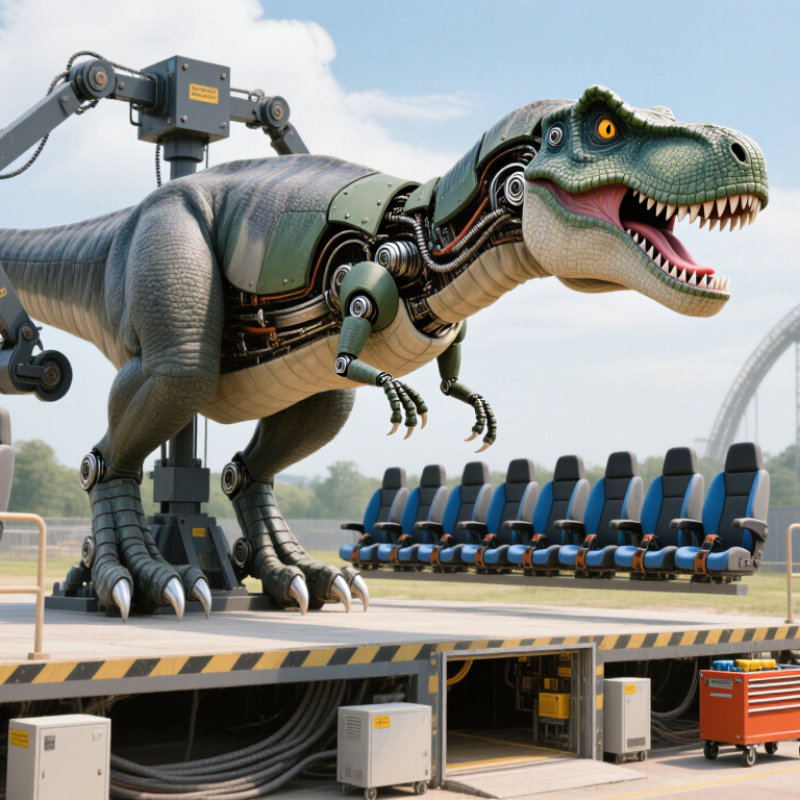
What Defines an Animatronic Dinosaur Ride Manufacturer?
An animatronic dinosaur ride manufacturer does more than sculpt a convincing creature. It coordinates mechanical design, motion control, ride structure, fabrication, installation, and after-sales support. Not just appearance. Ask who owns each stage, and who responds when a joint loosens or a sensor fails. A practical supplier should explain how the ride handles passenger loading, emergency stops, repeated operating cycles, and outdoor exposure. Look for clear test records, maintenance instructions, spare-parts plans, and operator training.
The TEA/AECOM 2023 Theme Index reported 244.6 million visits across the world’s 25 most-attended theme parks, up 23.1% from 2022. This figure measures park attendance, not dinosaur-ride sales or manufacturer quality. Still, it shows why attractions need dependable operation during busy periods. A capable manufacturer can describe prototype testing, inspection routines, and how moving parts are checked after installation. ASTM International’s F24 committee publishes standards for amusement rides and devices; buyers can ask how relevant standards inform the design and testing process.
Check the details in person when possible. Watch a full movement cycle, listen for irregular knocks, and inspect accessible service points. A polished showroom model can still hide weak maintenance planning. No checklist removes every risk; outdoor wear and frequent use can change performance over time. That part deserves honest discussion.
How Animatronic Dinosaur Rides Are Designed and Produced
Designing an animatronic dinosaur ride starts with its setting, audience, and operating conditions. A family attraction may need slower movements and clear sightlines, while a themed park ride can support more dramatic motion. Designers develop sketches and digital models, then map the dinosaur’s joints, movement range, and rider position. Scale matters: a head that looks impressive on screen may block views when built full size. Small details matter.
Engineers select a frame, motors, control systems, and exterior materials to suit the intended motion and environment. Fabricators build the structure, fit moving parts, and shape the skin around it, checking that seams and joints do not restrict movement. The finish is usually applied after repeated fitting, not as a final cosmetic shortcut.
Then comes testing. Teams run motion cycles and inspect noise, stability, heat, and wear. A prototype can look convincing yet feel stiff or unbalanced in motion. Those flaws may require changes to the mechanism, even when they delay production. Careful documentation and regular maintenance planning help keep the finished ride consistent over time.
Key Features for Evaluating Ride Quality and Safety
For an animatronic dinosaur ride, motion should feel convincing without jolting riders. Ask how the frame handles repeated starts, stops, and uneven loading. A stable base, protected joints, and neatly routed cables matter as much as lifelike skin. During a demonstration, watch the ride from the platform, not only from the queue. Listen for grinding, loose panels, or abrupt movement. Small clues matter.
Safety features need to be visible and testable. Check restraint fit across different body sizes, clear boarding space, handholds, and emergency-stop access. Ask for load-test records, inspection intervals, and a maintenance schedule with clear responsibilities. Sensors should stop motion when an entry gate opens or a fault appears. Operators need hands-on training, not just a manual. No checklist catches everything.
Compare manufacturers by asking them to explain failure scenarios in plain language. What happens after a power loss? How is a worn actuator found before it fails? Clear answers and easy repair access often predict dependable service better than dramatic effects. A glossy demonstration can hide weak maintenance planning, and that deserves attention. Even good designs need careful operation; that part is sometimes underestimated.
2026 Top Animatronic Dinosaur Ride Manufacturers? - Key Features for Evaluating Ride Quality and Safety
Use this evidence-based checklist to compare suppliers of animatronic dinosaur rides. It is an evaluation framework, not a manufacturer ranking: requirements vary by ride type, installation, operating conditions, and local jurisdiction.
| Evaluation Dimension | What to Evaluate | Evidence to Request | Why It Matters |
|---|---|---|---|
| Applicable standards and approvals | Confirm which amusement-ride rules and standards apply to the ride, site, and operating jurisdiction. Check the scope of any cited standard rather than relying on a general claim of compliance. | Applicable standards list; design and inspection documentation; approvals or certificates required by the local authority; records showing how the specific ride configuration was assessed. | Requirements are jurisdiction- and ride-specific. A certificate alone does not establish that every installation or operating condition is covered. |
| Structural and mechanical design | Review the supporting structure, moving joints, restraints, drive components, foundations, and provisions for foreseeable loads and repeated operation. | Design drawings; load and engineering calculations; material and component specifications; inspection access details; signed engineering review where required. | Sound design and maintainable construction help reduce structural, mechanical, and long-term reliability risks. |
| Motion and control system | Assess the ride’s operating envelope, speed and movement limits, control logic, emergency stops, fault response, and protection against unintended movement. | Control-system description; operating limits; safety-device list; fault-response and restart procedures; functional test records; documentation for software or control changes. | Predictable movement and clearly documented fault handling are important to passenger and operator safety. |
| Passenger seating and restraints | Check seat layout, passenger containment, restraint suitability, accessibility, safe loading and unloading, and whether the ride has clearly defined passenger restrictions. | Restraint specifications; passenger capacity and restriction documentation; inspection and adjustment instructions; loading procedures; verification that the intended users fit the designed seating and restraints. | Restraints and seating must suit the ride’s motion and intended passenger population. Capacity and restrictions should be set by the design and applicable rules. |
| Animatronic movement and pinch-point control | Inspect moving dinosaur parts for accessible pinch, shear, crush, and entanglement hazards, including areas reachable by riders, staff, or visitors. | Hazard assessment; guarding details; access-control provisions; safe maintenance positions; operating instructions for inspection and isolation. | Decorative or character movement can introduce hazards beyond those of the passenger ride itself. |
| Emergency and evacuation provisions | Review safe stopping, access to passengers, evacuation routes, emergency communication, and procedures for power loss or a ride stoppage. | Written emergency and evacuation procedures; staff training materials; site-specific access plan; documented drills or commissioning checks where applicable. | Clear, practiced procedures help staff respond consistently when normal operation is interrupted. |
| Electrical and environmental protection | Verify electrical protection, cable routing, enclosure suitability, bonding and grounding provisions, and environmental limits for the intended indoor or outdoor installation. | Electrical drawings; component ratings; installation requirements; inspection instructions; environmental operating limits and protection details for the installation site. | Moisture, dust, temperature, and electrical faults can affect both equipment reliability and safe operation. |
| Manufacturing quality and traceability | Check how critical parts are specified, inspected, identified, and controlled during fabrication and assembly. Ask how design or component changes are managed. | Quality-control procedures; material and component records; inspection and test reports; revision history; nonconformance and corrective-action process. | Traceable production records support consistent builds, troubleshooting, and responsible maintenance. |
| Commissioning and acceptance testing | Confirm that installation checks and tests cover the delivered configuration, safety devices, controls, operational limits, and handover requirements. | Commissioning plan; completed test results; open-item list and resolution records; operating and maintenance manuals; operator training sign-off. | Testing after installation helps verify that the ride and its site-specific setup work as intended before operation. |
| Inspection and preventive maintenance | Evaluate inspection tasks, maintenance intervals, wear-part replacement guidance, fault reporting, and access to serviceable components. | Maintenance schedule; daily and periodic inspection checklists; parts list; troubleshooting guidance; recordkeeping templates; recommended inspection qualifications. | Documented inspection and maintenance support ongoing safe operation and help identify deterioration or faults. |
| Reliability and service support | Assess parts availability, technical support arrangements, response process, warranty terms, and the ability to support the ride over its intended service life. | Written service and warranty terms; spare-parts list and lead-time information; support contact and escalation process; documented service history for comparable equipment where available. | Reliable support can reduce downtime and help ensure that repairs and replacements follow the approved design. |
| Documentation and operator training | Check whether instructions are complete, clear, and specific to the delivered ride, including operating limits, inspections, passenger loading, shutdown, and emergency response. | Ride-specific operator and maintenance manuals; training syllabus; procedures for abnormal conditions; records of training delivery and competency checks. | Operators need accurate procedures and training to operate and maintain the equipment consistently. |
| Commercial and lifecycle clarity | Compare the quoted scope, exclusions, installation responsibilities, commissioning, training, maintenance needs, and expected lifecycle costs. | Itemized quotation; project responsibility matrix; delivery and installation scope; warranty exclusions; maintenance and consumables estimate; change-control terms. | A transparent scope helps prevent important safety, installation, or service items from being overlooked during procurement. |
Standards references commonly relevant to amusement rides include ASTM International’s F24 standards and the EN 13814 and ISO 17842 series. Applicability depends on the specific ride and jurisdiction; verify current editions and local legal requirements with a qualified amusement-ride professional or authority having jurisdiction.
Leading Animatronic Dinosaur Ride Manufacturers in 2026
Leading animatronic dinosaur ride manufacturers in 2026 should be judged by more than lifelike skins. A convincing T. rex can draw attention, but dependable motion keeps a ride operating. Buyers should compare cycle times, passenger capacity, joint durability, weather resistance, and access to replacement parts. Ask for operating records from comparable outdoor attractions, not only polished demonstration videos. Look closely at neck movement, foot placement, and how the platform behaves under repeated loading. Small details matter.
The TEA/AECOM 2023 Theme Index reported 244.6 million visits across the world’s 25 most-attended theme parks, up 23.1% from 2022. That figure signals strong visitor recovery, but it is not a dinosaur-ride sales forecast. Manufacturers still need to show how their systems fit a venue’s space, staffing, and maintenance budget. Request documented safety testing, service schedules, and clear warranty terms before comparing bids. Ask what happens when a sensor fails mid-cycle. Get the answer in writing.
A fair 2026 comparison should also include installation support and spare-part lead times. These are easy to overlook. Public data rarely ranks dinosaur-ride manufacturers by reliability, so claims of being “the best” deserve careful checking. I would treat this as an imperfect process: attraction-specific service records are often harder to obtain than glossy renderings. The strongest supplier is the one that can explain its limits, not just its features.
Safety Standards Relevant to Animatronic Dinosaur Ride Manufacturers
Publication year of selected amusement-ride safety standard editions
ISO 17842 Parts 1–3 are the 2015 editions. ASTM F2291-24 is the 2024 edition. Edition years are shown for reference; verify current editions and local regulatory requirements when specifying a ride.
How to Choose a Manufacturer for Your Attraction
When comparing animatronic dinosaur ride manufacturers, judge the ride as an operating system, not a moving sculpture. Ask how the track, restraints, vehicles, controls, and dinosaur figures are engineered to work together. Request drawings, rated passenger capacity, operating limits, and maintenance schedules before reviewing the final price. A polished demo is useful, but it cannot show years of wear. Ask for references from attractions with similar climates, attendance, and ride durations. Tour the workshop.
Tips: Ask to see a full test cycle, including emergency stops, loading, and restart procedures. Get spare-part lead times and technician training in writing. Check who handles installation and commissioning. Ask for evidence.
A dependable supplier explains what is included and what remains the operator’s responsibility. Compare warranty coverage, software support, corrosion protection, and access to replacement parts. Ask how updates are tested and whether local staff can diagnose common faults. Pause if answers stay vague. I would also ask which component is most likely to fail first. It is an uncomfortable question, but an honest answer may reveal more than a glossy presentation.
