10 Tips for Buying the Best Coffee Vending Machine
Choosing a coffee vending machine is not just a matter of comparing prices or picking the most attractive screen. The right model should match its location, daily demand, drink preferences, and available maintenance support. A busy office may need fast service and a large ingredient capacity, while a small clinic may value quiet operation and simple cleaning. Small details matter. Check cup sizes, brewing options, water connections, and whether the machine can handle peak periods without long queues.
A careful comparison also looks beyond the purchase price. Ask suppliers about installation, warranty coverage, replacement parts, and routine servicing. Review the payment methods, energy use, and cleaning steps before committing. If possible, test the interface and sample the drinks; a glossy display cannot guarantee good coffee. Keep the numbers realistic. Sales estimates can be uncertain, especially in a new location, and a feature that sounds useful may go unused. That is worth considering.
The following ten tips offer a practical framework for evaluating machines and suppliers. They focus on capacity, drink quality, reliability, operating costs, and the needs of the people who will use the machine. No model is best for every site. Record your expected daily servings and compare them with the machine’s stated capacity, then confirm important specifications directly with the manufacturer or vendor. A little skepticism helps. The best choice is usually the one that fits your real environment, not the one with the longest feature list.
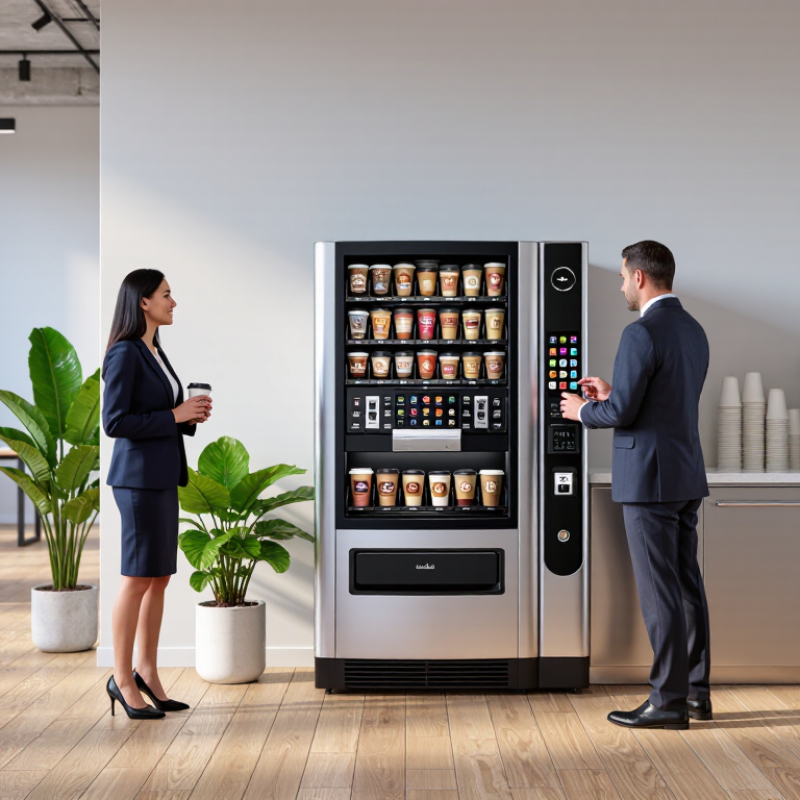
Assess Demand: NCA Found 67% of U.S. Adults Drank Coffee Daily in 2024
In 2024, 67% of U.S. adults drank coffee daily, according to the National Coffee Association’s National Coffee Data Trends report. That signals a strong routine, not guaranteed sales at every location. Demand shifts with work schedules, commute patterns, prices, and nearby options. A machine near a busy morning entrance may outperform one in a quiet hallway. Small details matter.
Before comparing machines, count foot traffic during specific periods, such as the 7–9 a.m. rush and afternoon breaks. Ask building managers about employee numbers and shift changes. NAMA’s 2024 State of the Industry report put U.S. convenience services revenue at $26.6 billion for 2023, but that broad figure covers more than coffee vending. It offers context, not a site-level forecast. Averages can mislead.
Use your local counts to estimate cups per day, then check whether each machine can handle peak demand without frequent refills. Match capacity to observed traffic, not optimistic guesses. Test drink quality, serving speed, payment options, and cleaning access before committing. A crowded lobby can still produce weak sales if the machine is awkward to use or often empty. Forecasts are imperfect. Track sales after installation and adjust the menu, pricing, or refill schedule as real patterns emerge.
Assess Coffee Demand: U.S. Adults’ Daily Coffee Consumption in 2024
What this means: About two-thirds of U.S. adults drank coffee daily in 2024, suggesting a substantial potential customer base for coffee vending machines. The 33% represents the remainder of adults who did not drink coffee daily.
Source: National Coffee Association, 2024. The non-daily share is calculated as 100% minus the reported 67%.
Compare Fresh-Brew, Bean-to-Cup, and Instant Vending Technologies
Fresh-brew, bean-to-cup, and instant machines solve different service problems; cup quality alone is a weak buying test. Fresh-brew units suit steady rushes and familiar filter coffee, but coffee can lose aroma while waiting in a pot. Ask how often batches are refreshed, and whether the machine can brew single cups during quiet periods. The National Coffee Association’s 2024 National Coffee Data Trends report found that 67% of U.S. adults drank coffee the previous day. It was the highest share in two decades. That signals broad demand, not a preference for any vending format.
Bean-to-cup machines grind beans for each order, which can deliver a fresher aroma and adjustable strength. They also add grinders, hoppers, and milk paths that require cleaning. Include labor and downtime in the cost comparison, not just the purchase price. Watch a full dispense, listen to the grinder, and inspect the drip tray. Small details matter.
Instant systems mix soluble coffee with hot water. They are often compact and quick, with fewer moving parts, though the taste may seem flatter. Water temperature and product quality can change the result. Request a blind tasting with the actual cup, water supply, and recipe planned for the site. The Specialty Coffee Association’s brewing resources emphasize controlling variables such as water and extraction. Vending equipment may offer less adjustment, so test what it can actually deliver. A trial may reveal an awkward truth: the most elaborate machine can be wrong for a quiet corridor.
Check Brew Quality Against SCA’s 195–205°F Water Temperature Range
When choosing a coffee vending machine, check whether it can brew within the commonly cited SCA water-temperature range of 195–205°F. That is about 90.5–96°C. The number matters because water that is too cool may produce a flat, sour cup, while excessive heat can bring out harsh flavors. Still, a temperature figure on a sales sheet is only a starting point.
Ask how the machine measures temperature and where the reading is taken. Boiler temperature may differ from the water reaching the coffee bed. If possible, test a drink after the machine has warmed up, then test several more during a busy period. Use a calibrated probe near the brew basket, not just the display. Consistency counts. A machine that reaches 200°F once but swings widely between servings may deliver uneven coffee.
Pay attention to recovery time after back-to-back brews, too. A small office machine and a busy lobby unit face different demands. Taste the coffee as well as checking the numbers; temperature alone cannot account for grind size, dose, or contact time. A quick test can miss problems. I would also record readings on different days, since room temperature and maintenance can affect performance. It is easy to overvalue a neat specification, and I would want evidence from real service conditions before deciding.
Match Capacity, Payment Options, and Accessibility to Peak Site Demand
A coffee vending machine should fit the busiest hour, not just the average day. Estimate how many drinks people buy during a morning rush, then compare that figure with the machine’s brewing speed and storage capacity. Check how often it needs refilling and cleaning. A machine that runs empty at 9 a.m. is not a bargain. Peak demand can be easy to underestimate.
Tip: Track actual foot traffic and drink sales for several busy days before choosing a capacity. If sales data is unavailable, ask nearby staff about rush periods. Treat their estimates as a starting point, not a guarantee.
Payment options and accessibility shape who can use the machine. Look for practical choices, such as contactless payment and a clear display, while checking whether the controls can be reached comfortably from a seated position. Leave enough room around the machine for people to approach, turn, and wait without blocking a corridor. Small details matter. Test the screen and payment flow in the actual lighting; glare can make a readable display frustrating. Even careful planning misses something. Revisit the setup after installation and adjust based on real use.
Compare Total Cost, Sanitation, and Service Needs Before Buying
A coffee vending machine’s purchase price is only the starting point. Estimate costs over its expected working life, including coffee, cups, filters, electricity, water, payment fees, cleaning supplies, and repairs. Ask suppliers for written estimates and clarify what the warranty excludes. Compare machines with similar capacity and features, not just similar prices. A spreadsheet helps, but it can still mislead: actual drink sales and waste are hard to predict.
Sanitation affects both daily workload and customer confidence. Check whether staff can remove and wash the drip tray, grounds container, and other food-contact parts without tools. Look for smooth surfaces and clear cleaning instructions. Ask how often cleaning is required and how long each routine takes. Small details matter. A bin that is awkward to reach may turn a quick task into a skipped one.
Service needs deserve equal attention. Confirm who handles maintenance, how quickly support usually responds, and whether common parts are readily available. Ask about technician travel charges and staff training, too. Downtime costs money. A cheaper machine may become costly if repairs take days or cleaning requires frequent specialist visits. Compare these practical costs against your location’s traffic, staffing, and available service coverage before choosing.
10 Tips for Buying the Best Coffee Vending Machine - Compare Total Cost, Sanitation, and Service Needs Before Buying
| Tip | What to Compare | Questions to Ask | Why It Matters |
|---|---|---|---|
| 1. Calculate the total cost of ownership | Purchase or lease price, delivery, installation, payment fees, ingredients, cups, filters, utilities, and maintenance. | Which costs are included in the quote, and which are charged separately? What is the estimated cost over the expected service life? | The upfront price alone does not show the ongoing cost of operating the machine. |
| 2. Match capacity to expected demand | Drink capacity, ingredient storage, water supply, peak-hour output, and refill frequency. | How many drinks can it prepare before ingredients or water need attention? Can it handle the busiest periods at your location? | A machine that is too small may need frequent refilling, while excess capacity can add unnecessary cost. |
| 3. Check cleaning access and sanitation | Removable food-contact parts, cleaning-cycle instructions, drain design, and access to internal areas that require routine cleaning. | Which parts need daily cleaning? Can they be removed and cleaned without special tools? Are cleaning instructions and logs provided? | Accessible components make routine cleaning easier and help support consistent hygiene practices. |
| 4. Verify applicable certifications and requirements | Relevant electrical and food-equipment certifications, installation requirements, and local health or building rules. | Can the seller provide documentation for the exact model? Does the installation meet the requirements at your site? | Requirements can vary by location and installation, so verify documentation rather than relying on a general claim. |
| 5. Compare water and filtration options | Direct water connection or refillable reservoir, filtration needs, filter replacement intervals, and water-quality requirements. | What water supply is required? How often should filters be replaced, and what is the replacement cost? | Water setup affects installation, maintenance workload, and the consistency of beverage preparation. |
| 6. Review ingredient and cup compatibility | Supported coffee formats, milk or topping options, cup sizes, and availability of compatible supplies. | Can the machine use supplies from multiple sources? Are any ingredients or containers restricted to specific formats? | Flexible sourcing can make restocking more practical and help avoid unexpected supply costs. |
| 7. Assess service coverage and response times | Local technician availability, service hours, typical response targets, remote diagnostics, and emergency support. | Who handles repairs? What response time is included, and are travel or after-hours charges extra? | Clear service arrangements can reduce downtime and make operating costs more predictable. |
| 8. Compare warranty terms | Warranty duration, covered parts and labor, exclusions, shipping costs, and requirements for routine maintenance. | What is excluded from coverage? Does using non-approved supplies or missing scheduled maintenance affect the warranty? | Warranty details determine how much repair risk remains with the buyer. |
| 9. Test usability and payment options | Screen readability, language options, accessibility, cashless payment compatibility, and transaction fees. | Can customers complete a purchase easily? Which payment methods are supported, and are there recurring service fees? | A straightforward purchase experience can reduce user confusion and support broader payment needs. |
| 10. Inspect the site and installation needs | Machine dimensions, ventilation clearance, floor support, electrical supply, water and drain access, and delivery route. | Will the machine fit through doors and into the planned space? Are electrical or plumbing upgrades needed before installation? | Checking the site in advance helps prevent installation delays and unexpected preparation costs. |
Related Posts
-
12 Best Hot Drinks Vending Machines for Ultimate Beverage Convenience
-
Discovering the Ultimate Convenience: What Makes the Best Coffee Vending Machine Stand Out?
-
Mastering the Art of Selecting the Best Coffee Vending Machine for Your Business Needs
-
2026 Best Coffee Vending Machine for Your Business Needs?
-
Top Benefits of Coffee Vending Machines for Your Office Cafe
-
Innovative Candy Dispenser Machines Set to Transform the Market at 138th Canton Fair 2025
