What Is an Industrial Vending Machine?

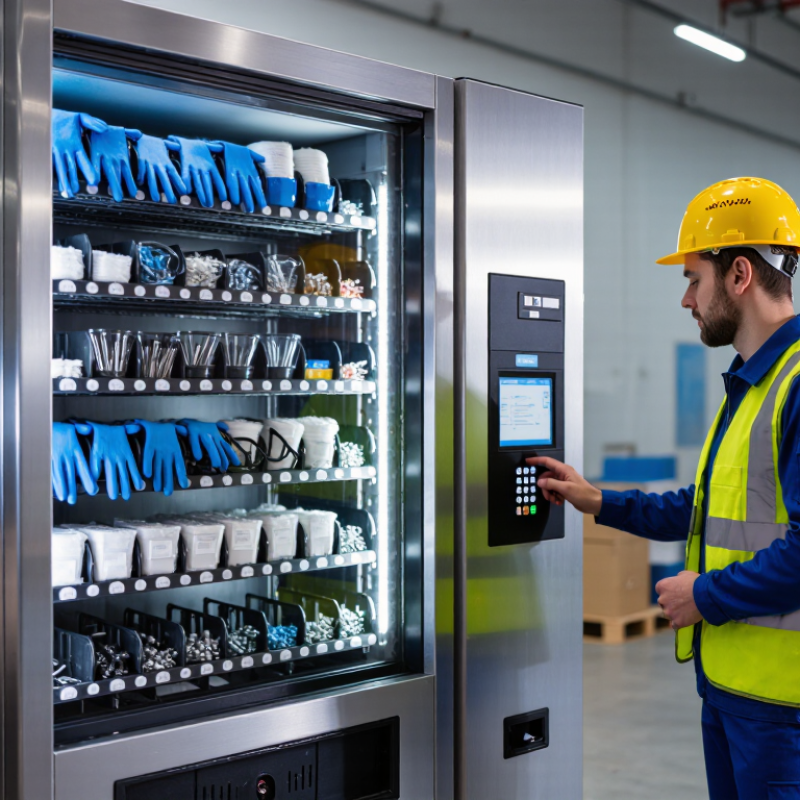
Industrial vending machines are automated storage and dispensing systems designed for factories, workshops, warehouses, and maintenance departments. They provide controlled access to frequently used supplies, such as gloves, cutting tools, safety glasses, fasteners, and cleaning materials. Instead of searching through open cabinets, an employee enters an identification code, selects an item, and receives it within seconds. The machine records who took it, when it was taken, and how much remains.

David Green, an industrial supply and inventory specialist, has described the core purpose clearly: “The value is not the machine itself; it is the control, visibility, and accountability around every item.” That perspective matters. A vending unit is only useful when its inventory settings match real workplace habits. A factory may need gloves available at midnight, while a precision-tool department may require approval before issuing expensive inserts.

The benefits can be practical and measurable. Supervisors can identify unusual consumption, reduce emergency purchasing, and maintain better stock levels. Workers spend less time walking to distant supply rooms. Small gains accumulate.

Still, the technology is not perfect. Poor product labeling can cause confusion. Incorrect refill limits can create empty compartments. Employees may also resist monitoring, especially when implementation feels punitive. Successful programs require clear policies, regular usage reviews, and human support beside the technology. Industrial vending machines should improve workflow, not replace thoughtful management.
What Is an Industrial Vending Machine?

Definition and Core Purpose of an Industrial Vending Machine

What Is an Industrial Vending Machine?

An industrial vending machine is a controlled dispensing unit for workplace supplies. It stores items such as gloves, safety glasses, drill bits, batteries, and maintenance tools. Authorized workers collect supplies using an employee ID, PIN, or approved access card. The machine records each withdrawal, user, time, and item quantity. Its core purpose is simple: place essential materials near the point of work while controlling inventory and usage.

This matters because factories lose time through stock searches, emergency purchasing, and unplanned shortages. The 2024 State of Smart Manufacturing report found that 95% of manufacturers had invested, or planned to invest, in artificial intelligence and machine learning. An industrial vending machine supports this direction through connected inventory data. The International Federation of Robotics reported 541,302 industrial robots were installed worldwide in 2023. More automation increases the need for reliable consumables and maintenance access.

The machine can also set minimum and maximum stock levels. It may trigger replenishment before a critical item disappears. That sounds efficient. It is not perfect. Incorrect item settings can create false shortages, while poor user training can damage accountability. Data can also lie when workers bypass the process or remove several items at once. For real value, managers must review withdrawal patterns, supplier lead times, and actual work conditions. A vending machine is not merely a cabinet with electronics. It is a small inventory-control system positioned beside production.

What Is an Industrial Vending Machine?

An industrial vending machine is an automated dispensing system used to control access to workplace supplies such as personal protective equipment, maintenance items, tools, and production consumables. Its core purpose is to make frequently used items available while improving inventory visibility and accountability.

Main Types and Common Inventory Categories

What Is an Industrial Vending Machine?

Main Types and Common Inventory Categories

An industrial vending machine is a controlled dispensing system for workplace supplies. It records users, quantities, and replenishment needs in real time. Unlike retail machines, it supports factories, warehouses, laboratories, and maintenance teams. According to Grand View Research, the broader global vending machine market was valued at approximately USD 21.8 billion in 2023. Industrial systems represent a smaller, more specialized segment, but their value comes from inventory control and reduced downtime.

The main types include coil machines, locker systems, carousel units, and smart cabinets. Coil machines suit gloves, earplugs, masks, and small tools. Locker systems handle larger items, such as power-tool batteries or replacement components. Smart cabinets use sensors or electronic access records. These features help supervisors identify unusual consumption patterns. MarketsandMarkets reports that industrial vending adoption is supported by demand for automation, traceability, and lean operations. The exact savings vary widely.

Common inventory categories include personal protective equipment, MRO supplies, cutting tools, fasteners, electrical parts, cleaning materials, and spill-control items. A well-run program places high-use products near production areas. It also sets minimum and maximum stock levels.

In practice, poor item classification can weaken the entire system. One oversized cabinet may look efficient, yet create dead stock. That is where real operating experience matters. Data helps, but workers still know which items disappear during a difficult shift.

Key Components and How the Dispensing Process Works

Industrial vending machines are controlled storage units for workplace supplies. They release approved items only to authorized users. Common contents include gloves, filters, drill bits, fasteners, and measuring accessories.

The cabinet holds adjustable shelves, spiral coils, bins, or individual locking compartments. A touchscreen, keypad, badge reader, or barcode scanner identifies the user. Inside, a controller connects these inputs with inventory software. Weight sensors, optical sensors, or motor feedback confirm whether an item moved. Network access sends usage records to supervisors and purchasing staff.

The dispensing process begins when a worker authenticates at the machine. They select an item, confirm the quantity, and receive an availability check. The controller unlocks a compartment or rotates a coil. A sensor then checks the release. If successful, the transaction records the user, item, time, and remaining stock. Simple enough.

Refilling requires care. Staff should match each product with its assigned location and test the release after loading. A crooked package can block a coil. A weak network connection can delay records. No system is flawless. In my experience, clear labels and sensible slot sizes prevent more problems than complicated settings. However, sensor readings still need periodic inspection. A machine may show stock while a damaged package remains stuck inside, so physical checks should support digital data.

Industrial Applications and Operational Benefits

What Is an Industrial Vending Machine?

Industrial Applications and Operational Benefits

An industrial vending machine is a controlled storage unit for workplace supplies. It releases approved items after worker identification, such as a badge or personal code. Common products include gloves, safety glasses, masks, cutting tools, batteries, and maintenance components. These machines serve factories, warehouses, construction sites, laboratories, and field service locations. A unit near a production line can reduce walking time during urgent repairs.

The main benefit is controlled availability. Managers can set access rules, quantity limits, and refill alerts. Usage records show which department takes each item and when. This information supports purchasing decisions and reduces hidden consumption. In a busy warehouse, workers may collect ear protection in seconds instead of waiting at a storeroom counter. Fewer interruptions can improve task continuity. However, the improvement depends on accurate item placement and regular replenishment.

Small details matter.

A practical installation considers temperature, lighting, electrical access, and the distance from workstations. Supervisors should review withdrawal data with workers, not rely on software alone. Early demand estimates are often wrong. A popular glove size may disappear before the next scheduled refill, while another size remains untouched. Machines also require cleaning, inspection, and clear emergency procedures. They cannot replace safety training or responsible supervision. When operated with disciplined inventory checks, they create a visible link between supplies, workers, and daily production needs.

Selection, Implementation, and Maintenance Considerations

An industrial vending machine is a controlled dispensing cabinet for workplace supplies, such as gloves, masks, cutting tools, and fasteners. It records each withdrawal and connects usage with employee, department, or job information. The value is not automatic dispensing alone. Selection must match real working conditions.

Start with item dimensions, issue frequency, storage life, and operating temperature. A dusty production area may need sealed compartments and reinforced interfaces. High-use items require wider dispensing channels. Low-use items may not justify a machine. Deloitte’s 2023 Global Smart Manufacturing Survey found that 86% of manufacturing executives expect smart manufacturing to support competitiveness. However, connectivity should solve a measurable problem, not decorate the factory floor.

Implementation works better as a small pilot. Track stockouts, emergency purchases, issue time, and unauthorized withdrawals for eight to twelve weeks. MHI’s 2024 Annual Industry Report notes that 55% of supply chain leaders planned to increase technology investment, but investment alone does not guarantee adoption. Train operators beside the machine. Keep a manual fallback. People forget.

Maintenance needs scheduled cleaning, sensor checks, software updates, and physical inspection of dispensing coils. Review usage data monthly, then adjust par levels and cabinet locations. A jammed compartment can stop trust quickly. Poor data can also create false savings. Managers should compare recorded withdrawals with physical counts and purchase records. The first configuration may be wrong. That is normal. Recheck it.

What Is an Industrial Vending Machine? - Selection, Implementation, and Maintenance Considerations

Decision Area Key Dimension Typical Data or Benchmark Selection and Implementation Guidance Maintenance Consideration
Definition Machine Function Automated dispensing and tracking of frequently used industrial supplies, including PPE, tools, consumables, and maintenance items. Choose a system that supports controlled access, inventory visibility, user identification, and transaction records. Confirm remote monitoring, diagnostic alerts, and access to replacement parts before installation.
Application Fit Item Category Commonly used for gloves, safety glasses, hearing protection, respirators, abrasives, fasteners, batteries, and small tools. Prioritize items with predictable demand, frequent stockouts, high usage, or a clear need for accountability. Review dispensing reliability for different package shapes, weights, sizes, and material sensitivities.
Machine Format Storage Configuration Typical formats include coil-based compartments, lockers, drawers, spiral dispensers, and modular vertical storage. Use adjustable compartments for varied item sizes and dedicated lockers for high-value or bulky equipment. Inspect motors, coils, drawer slides, door locks, and sensors according to usage intensity.
Capacity Planning Inventory Capacity Capacity varies widely by machine design; a practical planning target is approximately 1 to 4 weeks of normal consumption per stocked item. Calculate average daily usage, replenishment lead time, safety stock, and available storage positions before final selection. Rebalance product locations when demand changes or when frequently used items cause repeated empty slots.
Product Compatibility Item Dimensions and Weight Small industrial items may range from lightweight disposable PPE to heavier tools and packaged components. Measure the actual packaged dimensions and weight; do not rely only on catalog dimensions. Test irregular or flexible products. Remove damaged packaging and adjust dispensing settings when products jam, bridge, or fail to drop completely.
Access Control User Authentication Common methods include employee identification cards, PINs, barcode scanning, QR codes, and supervisor approval workflows. Match authentication strength to item value and workplace risk. Use individual accounts where traceability is required. Maintain user records, deactivate former users promptly, and test readers or scanners during scheduled inspections.
Inventory Control Reorder Logic Reorder points are generally based on average demand during supplier lead time plus safety stock. Set minimum and maximum levels by item rather than applying one threshold to every product. Check stock counts against physical quantities and investigate recurring variances or unexplained adjustments.
Data and Reporting Transaction Visibility Useful records include user, item, quantity, date, time, machine location, refill activity, and exception events. Integrate reports with procurement, safety, maintenance, or enterprise inventory systems when practical. Verify data synchronization, system clocks, network status, and backup procedures on a defined schedule.
Site Readiness Location Requirements Important factors include safe pedestrian access, sufficient floor space, lighting, environmental protection, and electrical availability. Place the machine near the point of use without obstructing emergency exits, walkways, electrical panels, or fire equipment. Keep the surrounding area clean and dry; inspect anchoring, leveling, cables, and ventilation where applicable.
Connectivity Network Availability Systems may use wired Ethernet, Wi-Fi, cellular communication, or offline transaction storage. Confirm signal strength, cybersecurity requirements, firewall rules, and continuity procedures before deployment. Monitor connection status and apply approved firmware or security updates according to the operating procedure.
Implementation Pilot Program A controlled pilot commonly covers one location or one work area before wider deployment. Measure dispensing accuracy, user adoption, refill workload, stockouts, and downtime during the pilot. Document faults, corrective actions, and lessons learned before standardizing the rollout.
Implementation Training Training should cover authentication, item selection, failed transactions, emergency access, and reporting responsibilities. Provide short user instructions at the machine and detailed procedures for supervisors and replenishment staff. Refresh training after software changes, product substitutions, or recurring user errors.
Operational Performance Stockout Rate A lower stockout rate indicates stronger replenishment performance; the target should be defined from baseline site data. Track stockouts by item, shift, and location instead of relying only on total inventory value. Use recurring stockouts to adjust par levels, delivery frequency, item positioning, or supplier lead times.
Operational Performance Dispensing Accuracy Dispensing accuracy is the percentage of successful transactions that deliver the correct item and quantity. Establish a baseline during the pilot and investigate repeated failures by product type or machine position. Clean sensors, inspect dispensing mechanisms, and recalibrate or replace worn components when necessary.
Maintenance Preventive Inspection Inspection frequency depends on traffic, environment, product type, and manufacturer instructions; high-use areas require more frequent checks. Create daily, weekly, and monthly checklists covering cleanliness, stock levels, access functions, and visible damage. Record inspection results, faults, parts used, technician actions, and return-to-service time.
Maintenance Critical Spare Parts Common service items may include dispensing motors, sensors, locks, power supplies, cables, readers, and control components. Keep critical parts available when downtime affects safety-critical supplies or production continuity. Use approved replacement parts and verify function through a documented post-repair test.
Cost Evaluation Total Cost of Ownership Total cost includes equipment, software, installation, connectivity, replenishment labor, maintenance, training, and consumables. Compare the expected cost with stockout reduction, labor savings, reduced waste, improved accountability, and purchasing control. Review actual operating costs periodically instead of evaluating the purchase price alone.
Safety and Compliance Workplace Controls The machine should support applicable workplace safety, electrical, accessibility, data protection, and hazardous-area requirements. Complete a site risk assessment and confirm local requirements before installation, especially in hazardous or outdoor environments. Inspect emergency access, electrical protection, physical stability, and labeling during routine audits.
End-of-Life Planning Scalability and Replacement Expansion may require additional machines, storage modules, user accounts, network capacity, or software licenses. Select a system with documented data export, migration options, modular capacity, and a clear support lifecycle. Plan for secure data removal, responsible equipment disposal, and replacement of obsolete components.

Note: The figures and benchmarks shown are planning references rather than universal specifications. Actual capacity, operating limits, service intervals, and performance targets should be validated against the selected equipment, site conditions, product packaging, and applicable regulations.