
What Is a Bag Chain and Which Type Is Best?
A Bag Chain is more than a decorative detail. It can change how a handbag feels, hangs, and performs during daily use. In practical terms, it is a linked or flexible strap attached to the bag’s hardware. Some designs use polished metal links, while others combine chain sections with leather, fabric, or woven material. Each choice creates a different balance between appearance and comfort.
Small details matter.
A metal Bag Chain may provide a structured, refined look. However, heavier links can pull on delicate bags or feel cold against the shoulder. Leather-wrapped chains often reduce pressure and offer a softer grip. They may also develop marks, creases, or color changes over time. Acrylic chains are lightweight and expressive, but their larger links can look less formal. Woven chains usually feel comfortable and flexible, although they may collect dust between the fibers.
The best type depends on the bag’s size, your routine, and the chain’s construction. Check the clasp, connection rings, link strength, and stitching before choosing. A chain should sit securely without twisting or stressing the bag’s edges. For evening use, polished metal may be the most suitable. For commuting, a wider or padded design could be more practical. There is no universal winner. My own preference has changed after wearing heavier chains for several hours. A beautiful chain can still become uncomfortable. This guide compares materials, styles, durability, and everyday handling, helping you make a more informed and realistic choice.
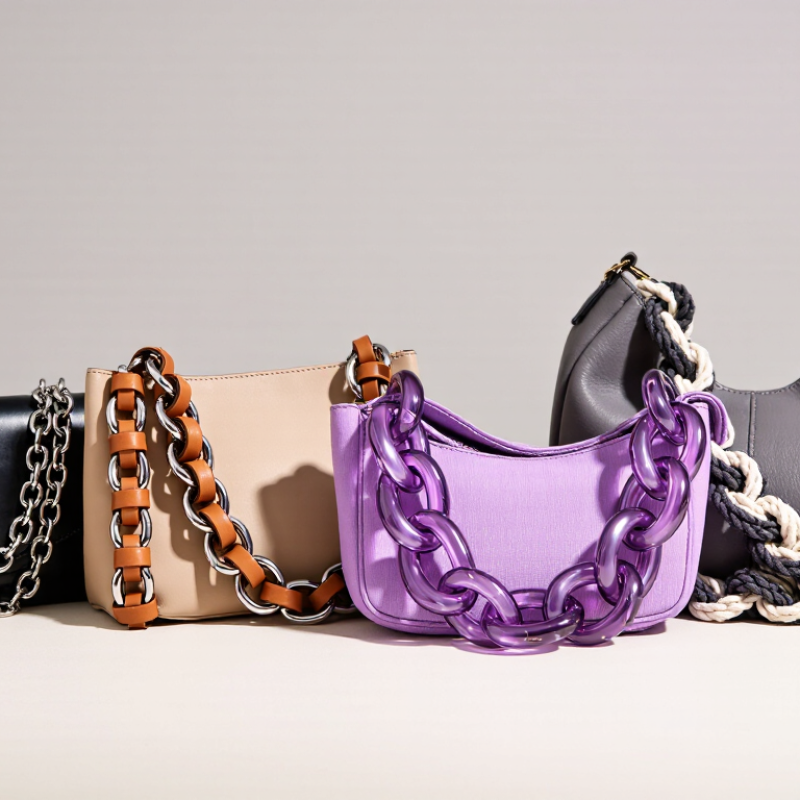
What Is a Bag Chain and How Does It Work?
A bag chain is a detachable carrying strap made from linked metal, leather, fabric, or mixed materials. It connects to the bag through swivel hooks, rings, or reinforced anchor tabs. When the chain moves, each link shares part of the load. This reduces sharp pressure at one point, but weak stitching can still fail. I have seen attractive chains twist near the clasp. That small detail matters.
Chain length changes how a bag works. A short chain supports hand carrying or shoulder wear, while a longer chain creates a crossbody position. Metal chains feel structured and resist abrasion, but they may add noticeable weight. Leather-woven chains feel softer against clothing and usually create less noise. Mixed chains offer balance, though their connectors need careful inspection. Grand View Research’s handbag market analysis projects steady growth through 2030, with material and design innovation supporting demand. The Business Research Company’s Handbags Global Market Report 2025 also identifies versatility as an important purchasing factor. These findings support adjustable chains for buyers who want one bag to serve several settings.
The best chain depends on the bag’s weight, anchor strength, and daily use. For a small evening bag, a fine metal chain may look precise. For heavier items, a wider leather or mixed chain distributes pressure better. Check the clasp, welds, edge finishing, and stitching before purchase. Ask whether the chain can be replaced. It should not feel perfect only in photographs.
What Is a Bag Chain and Which Type Is Best?
A practical comparison of common bag-chain constructions, materials, and uses
| Chain Type | How It Is Made | Typical Width | Flexibility | Main Advantages | Potential Drawbacks | Best Application |
|---|---|---|---|---|---|---|
| Curb Chain | Flat, interlocking oval links that lie closely together. | Approx. 4–12 mm | High | Strong, widely available, visually balanced, and suitable for everyday shoulder bags. | Heavier than fine cable chains; wide links may catch on delicate fabrics. | General-purpose handbags and replacement straps. |
| Cable Chain | Round or oval links connected in a simple alternating pattern. | Approx. 2–8 mm | High | Lightweight, flexible, easy to attach, and available in many finishes. | Very thin versions may twist or deform under excessive load. | Small purses, pouches, decorative handles, and lightweight bags. |
| Ball Chain | Small metal spheres joined by short connector sections. | Approx. 1.5–4 mm | Very high | Light, highly flexible, distinctive texture, and easy to shorten with compatible connectors. | Less comfortable against the shoulder; connectors can separate if overloaded. | Light accessories, decorative details, and compact bags. |
| Snake Chain | Tightly connected, smooth plates or rings forming a continuous surface. | Approx. 2–6 mm | Very high | Smooth feel, polished appearance, and minimal snagging on clothing. | Can kink permanently if sharply bent; repairs are more difficult than for open-link chains. | Dressy handbags and designs requiring a sleek, continuous strap. |
| Paperclip Chain | Large elongated oval or rectangular links with a modern open profile. | Approx. 6–15 mm | Medium to high | Bold appearance, easy to clean, and visually noticeable on larger bags. | Usually heavier and less compact than smaller-link chains. | Statement bags, oversized totes, and fashion-focused designs. |
| Multi-Strand Chain | Two or more parallel chains connected by end fittings or shared hardware. | Approx. 8–20 mm total | Medium | Creates a substantial look and distributes contact across a wider area. | More components mean greater weight, cost, and potential maintenance. | Medium or large bags that need a prominent, structured strap. |
| Chain With Leather or Textile Insert | A chain is combined with a leather, faux-leather, or textile strip through or around the links. | Approx. 8–25 mm total | Medium | Improves shoulder comfort, reduces metal contact, and combines decorative and practical functions. | The insert may wear, stain, crack, or require more careful cleaning. | Shoulder bags used for longer periods or bags carrying moderate weight. |
How a Bag Chain Works
| Component | Function | What to Check |
|---|---|---|
| Chain Links | Transfer the bag’s weight along the length of the strap while allowing movement. | Links should be evenly formed, securely closed, and free from sharp edges. |
| End Connectors | Join the chain to rings, tabs, swivels, or other bag hardware. | The connector must match the chain size and close firmly without excessive play. |
| Swivel Hooks | Allow the strap to rotate and attach or detach from the bag. | Look for smooth rotation, a secure gate, and adequate metal thickness. |
| Bag Attachment Points | Anchor the chain to reinforced areas of the bag body. | Reinforcement is essential because strong chain hardware can stress weak fabric or thin leather. |